Female samurai · onna-musha
Female Samurai: The Onna-Musha and the Naginata
Samurai were not only men. Some women trained, armed, and fought.
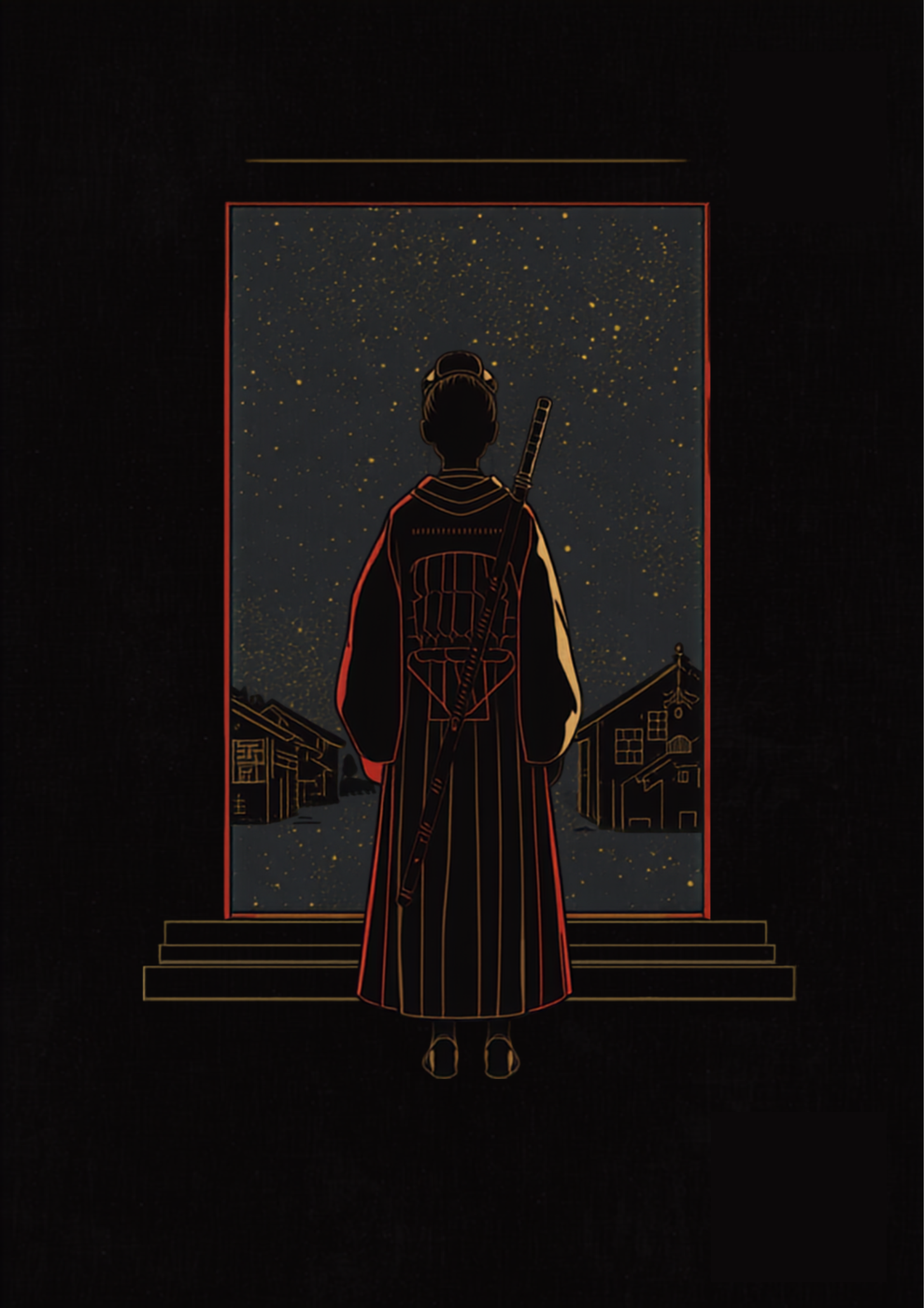
A naginata leaning by a doorway; quiet, domestic, ready.
Women of warrior households — onna-musha — trained with the naginata, a curved polearm well suited to keeping an armoured attacker at a distance. They defended homes, held castles under siege, and at times took the field.
The most famous figure, Tomoe Gozen, appears in the medieval war epics as a peerless mounted warrior. How much of her is history and how much is literature is debated to this day.
The tradition is real; the single most famous name sits half in legend.
True, or told?
Documented: a genuine tradition of armed warrior women and the naginata. Mixed: Tomoe Gozen stands between history and epic.
The Hiroshima thread
Warrior households across Aki — the Mori lands now in Hiroshima — included women trained to defend them.
These weren't far-away legends.
The warlords of these stories built their castles in Aki — today's Hiroshima. Read the full arc, from the first samurai to the last.
Read “The Real Samurai” →Where this fits
Bring a piece of this history home.
Hand-finished goshuin castle seals — printed on paper recycled from the paper cranes offered at the Hiroshima Peace Memorial Park. One seal, one castle, one story.
Visit the 御城印 shop →