Three arrows story · Mori Motonari
The Three Arrows: Japan's Famous Lesson in Unity (and Why It May Be a Legend)
A dying warlord, three sons, three arrows — Japan's most quoted lesson in unity may not have happened the way it is told.
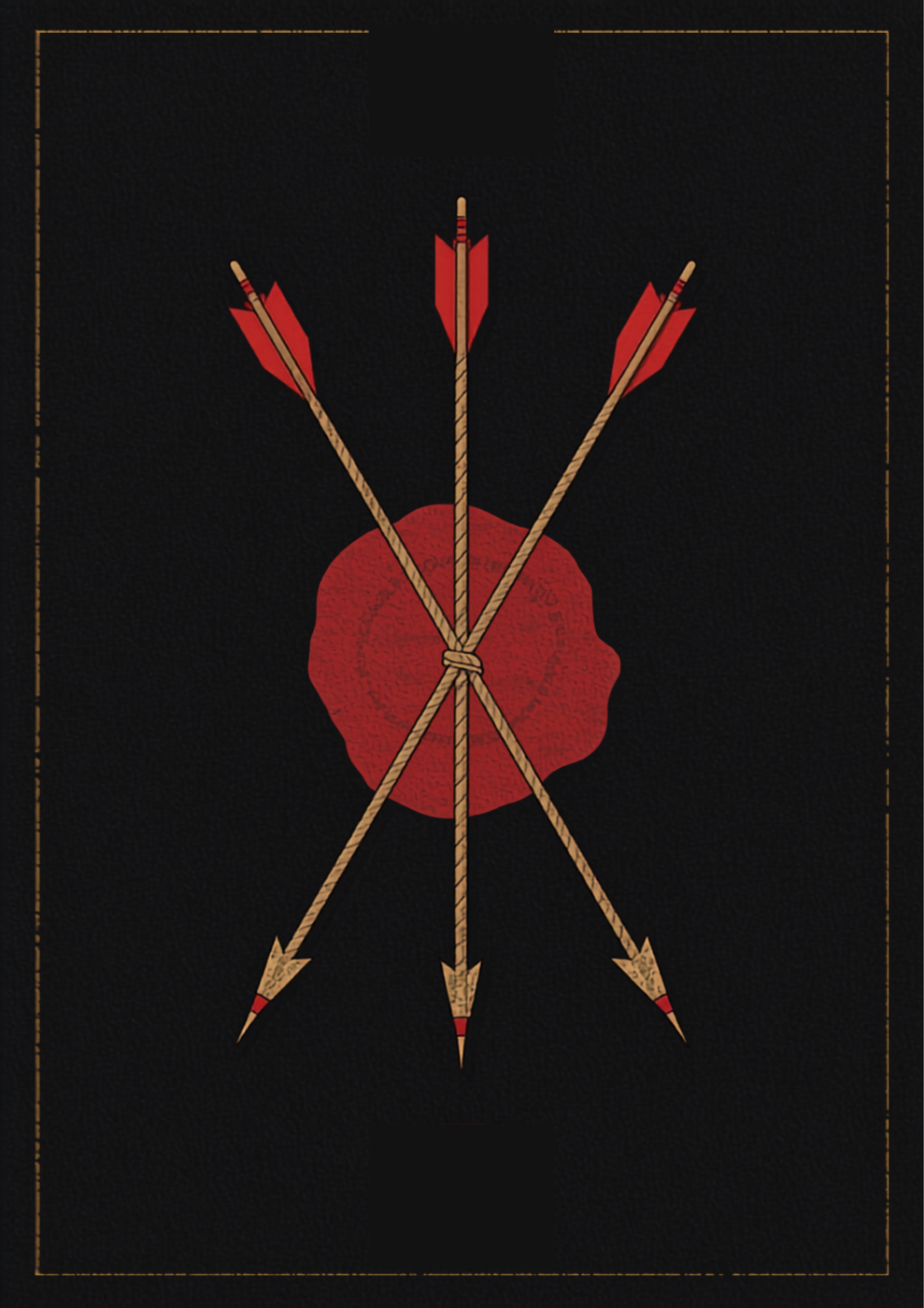
Three arrows bound with cord over a gold seal; one loose arrow snapped beside them.
The story goes that Mori Motonari called his three sons together and handed each a single arrow to snap — easy. Then he gave them three bound arrows: unbreakable. Stand together, he told them, and no one will break you.
The image became a national symbol of unity, quoted in classrooms and boardrooms across Japan.
The catch: historians treat the dramatic deathbed scene as later legend. Motonari did, in his own surviving writings, urge his sons toward unity — but the neat arrow demonstration is not in the contemporary record.
True, or told?
Motonari's written appeals for unity are documented. The bound-arrows demonstration is a beloved moral tale (教訓譚), not contemporary record.
The Hiroshima thread
Motonari ruled from Yoshida-Kōriyama Castle in Aki — today Akitakata, Hiroshima — and its ruins still climb the hillside.
These weren't far-away legends.
The warlords of these stories built their castles in Aki — today's Hiroshima. Read the full arc, from the first samurai to the last.
Read “The Real Samurai” →Where this fits
Bring a piece of this history home.
Hand-finished goshuin castle seals — printed on paper recycled from the paper cranes offered at the Hiroshima Peace Memorial Park. One seal, one castle, one story.
Visit the 御城印 shop →