Is bushido real · origin of bushido
Was Bushido Real? The Samurai Code Was Largely Shaped After the Samurai
The neat 'samurai code' the world quotes was crystallized after the samurai were gone — partly in English, for Western readers.
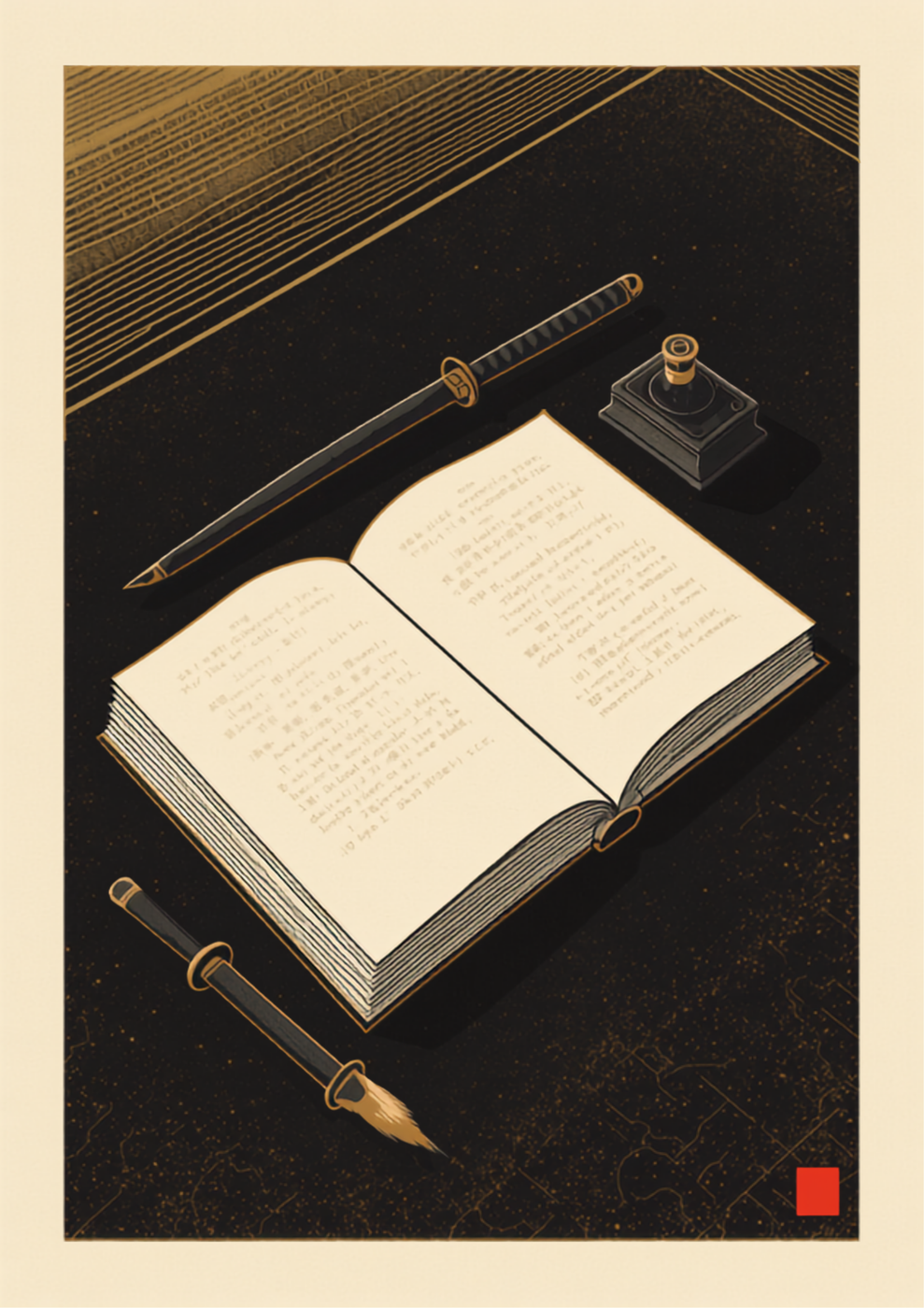
An old book spine in English beside a sword; the word frames the weapon.
Ideas about warrior conduct existed for centuries, but the unified, tidy 'Bushido' most people cite was shaped largely in the peaceful Edo era — and powerfully popularized by Nitobe Inazō's 1900 English-language book, Bushido: The Soul of Japan, written to explain Japan to the West.
On the real Sengoku battlefield, switching lords for a better position was common enough to be a career skill. Loyalty-unto-death was an ideal, not a universal practice.
None of this makes the samurai less interesting — it makes them human.
True, or told?
Documented: Nitobe's 1900 book and its Western audience; and the gap between the idealized code and messy practice. Scholars treat 'bushido' as partly a modern construct.
The Hiroshima thread
The Mori warlords of Aki lived the messy version — the one before the code was tidied up.
These weren't far-away legends.
The warlords of these stories built their castles in Aki — today's Hiroshima. Read the full arc, from the first samurai to the last.
Read “The Real Samurai” →Where this fits
Bring a piece of this history home.
Hand-finished goshuin castle seals — printed on paper recycled from the paper cranes offered at the Hiroshima Peace Memorial Park. One seal, one castle, one story.
Visit the 御城印 shop →