What did samurai do in peacetime · Edo samurai
When Samurai Went Broke: The Warrior Class in 250 Years of Peace
Two and a half centuries of peace did something no enemy could: it made the samurai poor and bored.
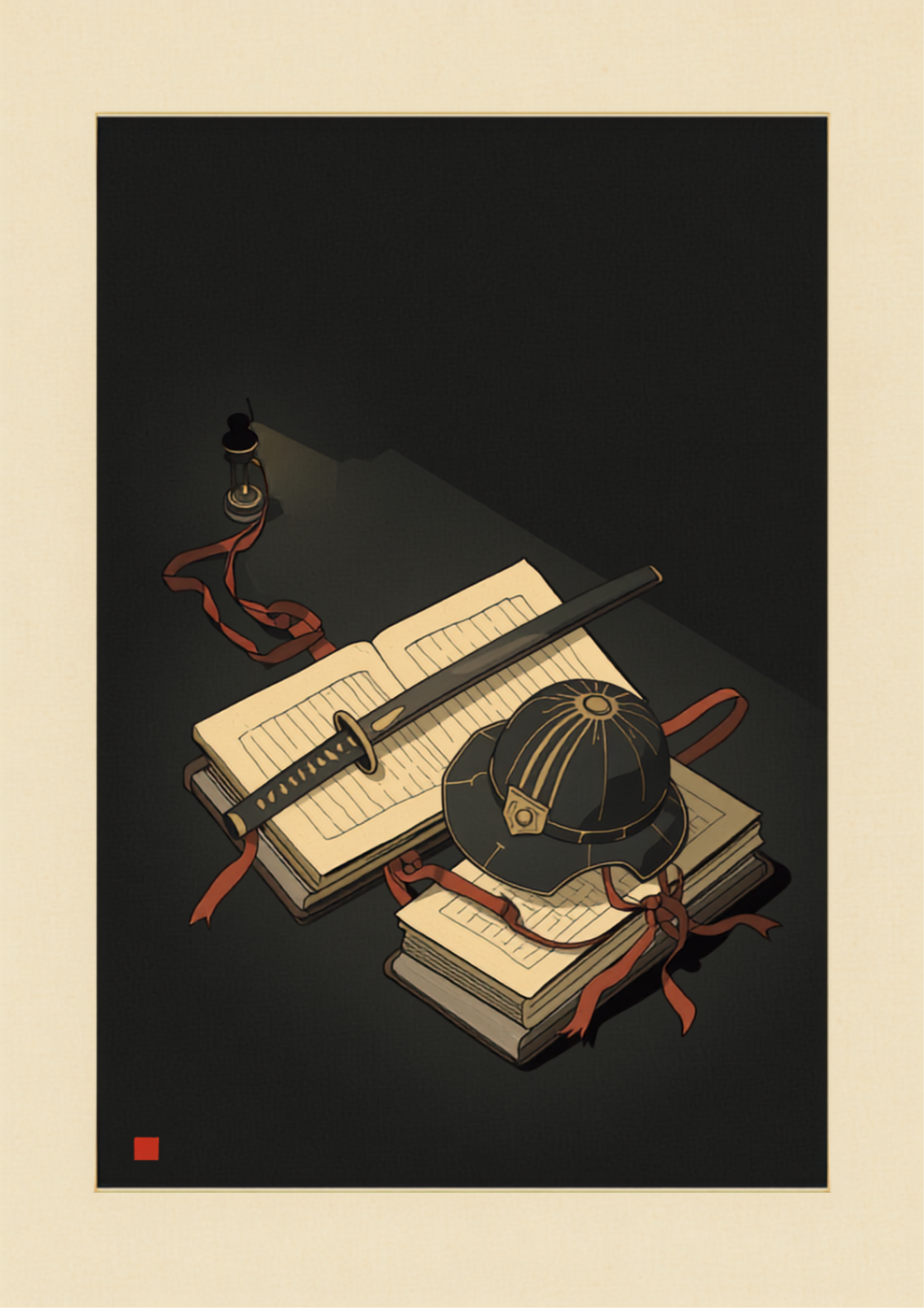
A sword resting on a desk stacked with ledgers; lamp-lit, slightly sad.
In the long Edo peace, samurai became salaried administrators, paid in rice stipends that lost value as the years passed. Many slid into debt; some quietly took side work or sold off heirlooms to make ends meet.
The fiercest class in Japan turned into an indebted bureaucracy carrying swords it almost never drew — clerks with a warrior's pedigree and a budgeting problem.
It is a quietly human ending, and it set the stage for the moment the class was abolished altogether.
True, or told?
Documented social history of the Edo samurai: fixed stipends, inflation, indebtedness, and administrative roles.
The Hiroshima thread
The garrison of Hiroshima Castle lived this slow transformation, like samurai across the country.
These weren't far-away legends.
The warlords of these stories built their castles in Aki — today's Hiroshima. Read the full arc, from the first samurai to the last.
Read “The Real Samurai” →Where this fits
Bring a piece of this history home.
Hand-finished goshuin castle seals — printed on paper recycled from the paper cranes offered at the Hiroshima Peace Memorial Park. One seal, one castle, one story.
Visit the 御城印 shop →